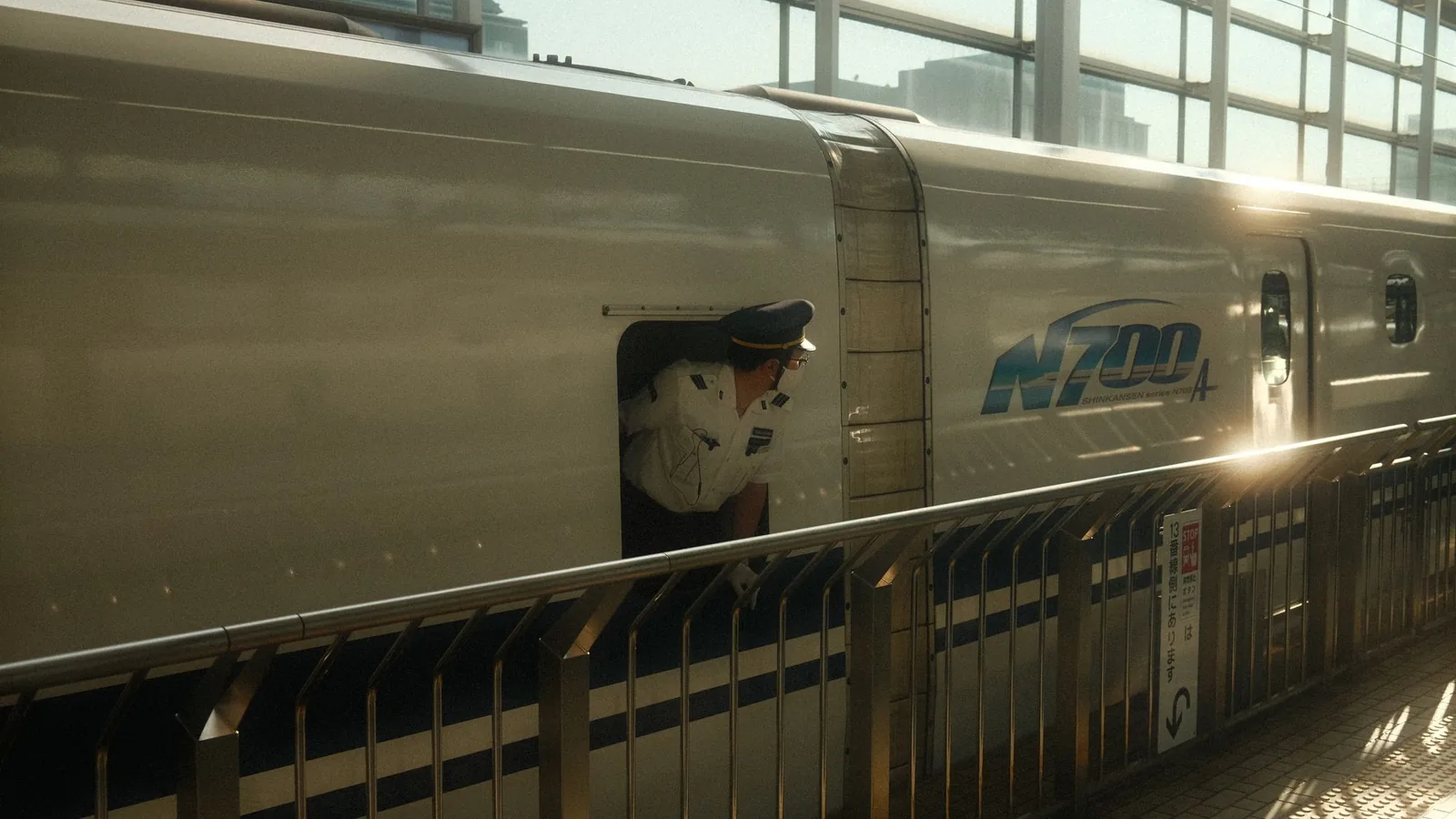
A cancelled Shinkansen (Japanese bullet train) and a train that reaches its destination two hours late do not have the same refund. Under the official rules for Smart EX, the online booking service for the Tokaido, Sanyo and Kyushu Shinkansen, a passenger whose reserved train is cancelled and who abandons the journey gets a full refund without a fee. If the passenger travels and arrives at least two hours late, the operator refunds its specified amount for each reserved boarding section, not necessarily the full ticket price.
How you boarded matters just as much: a qualifying journey recorded through the QR ticket or linked IC transit card normally gets its disruption-related refund automatically, while a ticket already collected on paper must be handled at an eligible station counter. These are Smart EX's published disruption rules, checked on 31 October 2026. They do not automatically govern every Japan Rail Pass, travel-agency ticket or unrelated railway.
Your train was cancelled before you travelled
When Smart EX confirms that the train you reserved will not run, and you choose not to travel, its official refund rule says the reservation is refunded in full with no cancellation charge. That is different from deciding on your own that weather looks bad while the train is still scheduled to operate.
If severe delays or cancellations affect a broader section, Smart EX sometimes publishes a special no-fee cancellation notice on the account's main screen. Its separate disruption FAQ says an eligible customer who has not collected a paper ticket can open My Trips → Details (Change/Refund) and cancel the affected booking under that announced handling. The notice must cover your booked section and dates; a forecast or an ordinary delay does not itself guarantee a free cancellation.
For an affected Tokaido/Sanyo boarding station, that special self-service opportunity normally lasts until the reserved train actually departs, even if its printed timetable departure has passed. The Kyushu boarding-station exception allows some procedures later during the travel date. Do not assume either exception applies without the current operator notice. If the train has genuinely been cancelled, follow the disruption handling rather than paying an ordinary voluntary cancellation fee by mistake.
Example — train cancelled, no journey made: A traveller has a Smart EX reservation from Tokyo to Kyoto and sees the operator mark that specific train cancelled. The passenger does not travel. The eligible ticket is refundable in full with no cancellation fee. The exact yen refund is the amount actually paid for that qualifying booking, rather than a made-up flat payment for every traveller.
Your train ran, but reached its destination at least two hours late
This rule is for a passenger who boarded and whose train arrived at its reserved destination at least two hours behind schedule. Smart EX promises a refund of a defined “specified amount” for each reserved section, depending on the booked product and route. The operator's standard Smart EX fare page distinguishes that disruption refund from an ordinary cancellation charge.
The actual delay on arrival at the reserved destination matters, not merely a predicted two-hour delay on the departure board. Two hours is a threshold, not an automatic refund of the whole fare. A train reaching its destination 1 hour 59 minutes late has not reached the published two-hour threshold. A train arriving 2 hours 5 minutes late has, but the amount returned is still the applicable specified amount, not the original total ticket price, the cost of a hotel or a missed flight.
JR Central's general disruption policy similarly discusses refunding the limited-express charge on qualifying train delays; that is not a promise to repay every fare component on every discounted Smart EX product. Do not invent a fixed yen refund without the ticket's actual product and reserved sections.
Example — late arrival, journey completed: A traveller actually rides the reserved Shinkansen to Shin-Osaka and arrives 125 minutes late. That meets the two-hour threshold. With a normal QR/IC boarding record, the eligible Smart EX disruption adjustment is automatically processed to the payment card. With printed tickets already collected, bring the paper tickets to the counter; do not wait for an online refund that the service says it cannot automatically make for collected paper.
A paper ticket changes where you claim the refund
Smart EX distinguishes boarding by QR ticket or linked IC card from picking up printed tickets:
- QR/IC boarding: For an eligible actual cancellation or delay, the service uses the ticket-gate or ticket-machine boarding records and says members do not need to submit their own claim for the calculated disruption refund. This is not a guarantee that every unused, unscanned booking will be recognized as a boarded journey; follow the separate operator notice if you never travelled.
- Paper ticket already picked up: Bring the original tickets to a ticket window or fare-adjustment office at a major JR Central, JR West or JR Kyushu station. Where the counter is crowded, ask staff to validate the ticket for a refund. The official disruption FAQ says a validated ticket may be taken to an eligible counter within one year of its validation date. Keep the marked ticket safe.
- Ordinary ticket cancellation without disruption: Once you have collected the paper ticket, do not try to cancel it in the app. Smart EX's ordinary refund guide tells you to bring the printed ticket and the credit card used for payment to an eligible counter by the boarding date, subject to that product's rules. This is a different deadline from the marked-ticket disruption procedure above.
Refunds are credited back to the original payment credit card, not usually paid out in cash to a different card. Card-provider currency conversion or overseas transaction charges can affect what a foreign cardholder later sees on a statement; Smart EX does not promise to reimburse those bank charges.
If the train stopped halfway or returned to where you started
There are two further outcomes in Smart EX's interruption FAQ. If the journey ends at an intermediate station and you stop travelling, the operator describes a refund for the untravelled section plus the applicable specified amount, with a cap so the refund does not exceed the original selling price. If the Shinkansen returns you to your reserved departure station, the operator provides the return transportation and a full no-fee refund under that circumstance.
These are more specific than “the train was late.” They depend on what actually happened and whether you continued on another train. Smart EX also describes the option of continuing on a later Tokaido/Sanyo/Kyushu Shinkansen if your service stops en route; the applicable refund is not identical to abandoning the journey. Ask station staff about your exact disruption status before giving up your paper ticket.
Ordinary cancellation and not turning up are different again
If you simply change your mind about a normally operating train, the usual rules—not the emergency notice—apply. The ordinary Smart EX Service currently lists a ¥320 refund fee before departure for its standard product. Other discounted, special, multi-section or return products may differ. An eligible passenger with an uncollected booking can normally cancel in My Trips before the booked train departs and before entering the Shinkansen gates.
If the train departs and the reserved seat goes unused, Smart EX may issue a partial post-departure refund after deducting the applicable specified amount for that fare. That is not the same as a full cancellation refund or a reward for a late train. A traveller holding an already collected paper ticket cannot assume the service automatically detects nonuse. Never promise that every missed booking can be fully recovered.
For delayed trains, Smart EX's reservation guide gives special handling and emergency notices. The most useful decision is to distinguish operator-verified disruption from voluntary nonuse, before clicking a refund option.
The practical result for two travellers
Traveller A: a family with QR boarding, train cancelled before the gate. The family checks the specific reserved service and Smart EX's disruption message, chooses not to travel, and follows the fee-free cancellation instruction if offered in My Trips. The cancellation outcome is a full eligible ticket refund, but not automatic hotel or onward-flight compensation. A separately booked hotel may have its own cancellation policy.
Traveller B: a visitor holding printed tickets, train arrives 130 minutes late. The journey was completed, so the person should expect only the specified disruption refund, not necessarily all money back. Because printed tickets were collected, the visitor takes them to the eligible JR counter; if staff validate the tickets for a later refund, the visitor retains them and uses the one-year-from-validation deadline. The visitor does not try to use a QR/IC automatic refund path that does not apply to a collected ticket.
Remember: cancellation without travel → generally full no-fee refund for the cancelled reserved train; completed journey at least two hours late → specified amount, not the whole ticket; QR/IC and collected paper tickets follow different claim procedures. This article is about Smart EX bookings on the Tokaido/Sanyo/Kyushu bullet-train network. For deciding what train to book next, see the separate Japan rail fares and passes guide. For luggage that may miss your accommodation, the luggage-forwarding guide addresses a different practical issue.